

A former JIBC Office of Indigenization staff member begins a new chapter as part of JIBC’s largest-ever police recruit cohort.
As JIBC marks National Police Week and welcomes the largest cohort of police recruits in its history, one new Surrey Police Service (SPS) recruit’s journey is resonating especially deeply across campus.
Less than a year ago, Charlotte Stanwood joined JIBC’s Office of Indigenization as a Program Planner, drawn to the role by a desire to better understand her heritage as a citizen of Métis Nation B.C. and deepen her connection with Indigenous community, culture and perspectives. A few years earlier, Stanwood and her father had begun learning more about their family history and reconnecting with their Indigenous roots together.
“I really wanted to better understand my history, connect with my Métis roots, and become more involved within the community,” she said.
At the same time, she had long been interested in criminal justice and policing. Discovering a role at JIBC that connected Indigenous perspectives with public safety education was a unique opportunity.
“Being able to combine my passion for public service while connecting to my Indigenous identity made the experience incredibly meaningful to me.”
Working in the Office of Indigenization gave her a front-row seat to the evolving relationship between Indigenous communities and policing — and to the impact culturally responsive education can have on future officers.
“I think it’s really important,” she said. “There’s so much Indigenous history and experience that people don’t know about. Once they understand the full story, it changes things.”
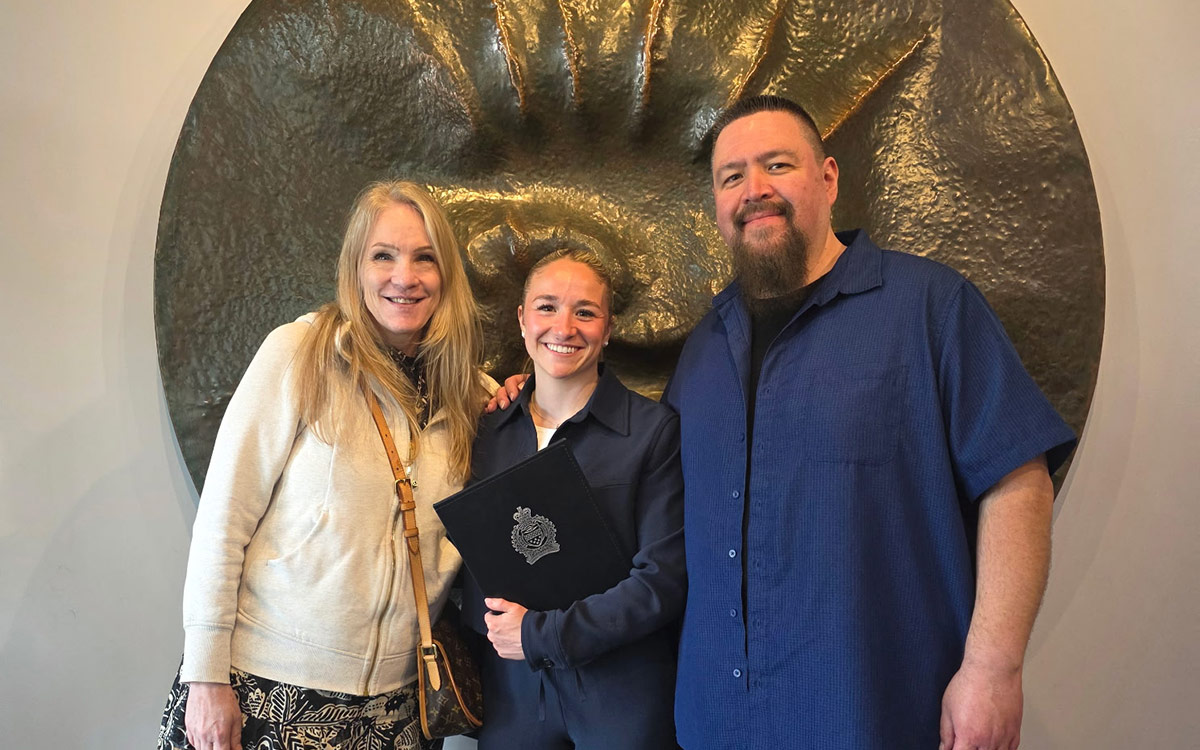
Shortly after joining JIBC, Stanwood participated in the Office of Indigenization’s Indigenous Youth Career Camp, an experience she says first sparked the realization that policing could be the right path for her.
“The police day just took my breath away,” she said. “I began to realize policing was the path I wanted to pursue.”
A major influence during that time was Constable Steve Hanuse, an Indigenous officer from the ʼNa̱mǥis First Nation who works in SPS’s Indigenous Relations unit. With more than 26 years of policing experience, Hanuse is known for helping build relationships between police and Indigenous communities while mentoring Indigenous people interested in policing careers.
“Steve Hanuse was the biggest push for me,” said Stanwood. “Meeting him and talking one-on-one about policing and how Indigenous roles take place in it really inspired me.”
As time went on, that interest continued to grow through her day-to-day experiences on campus. From her office, she could watch police scenarios and training exercises unfolding nearby at the Police Academy.
“Seeing the scenarios right outside my office window made me so excited,” she said. “I was like, ‘I want to be on the opposite side of the window. I want to learn these scenarios.’”
Support and encouragement from colleagues, mentors, and Indigenous policing leaders helped solidify her decision. She also credits Nicole Mate, Coordinator of the Office of Indigenization, and Jason LaRochelle, Director of the Office of Indigenization, as important mentors during her time at JIBC.
“Nicole and Jason were incredibly impactful mentors in my journey,” she said. “They encouraged me to follow my goals and supported me every step of the way.”
Now, as she begins training with Surrey Police Service, she hopes to eventually work closely with Indigenous communities and continue strengthening those connections through policing.
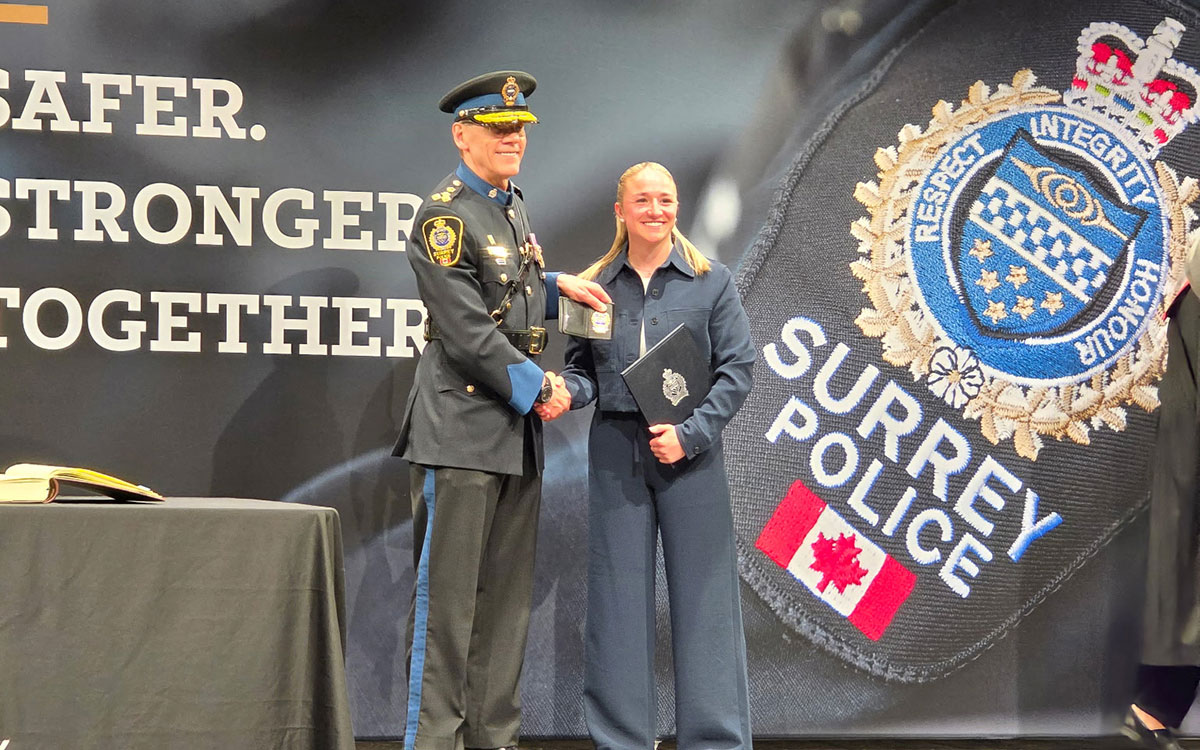
“Reconnecting to that part of my life is really important to me,” she said. “It’s like full circle almost.”
As JIBC welcomes its largest-ever police recruit cohort during National Police Week, stories like Charlotte’s highlight the growing importance of representation, cultural understanding, and Indigenous perspectives in shaping the future of policing in British Columbia.
We are proud that she remains part of the JIBC community as she begins this next chapter, and we look forward to cheering her on at the Academy and beyond.