

Achievements of approximately 495 future justice and public safety leaders celebrated
The Justice Institute of British Columbia (JIBC) celebrated approximately 495 graduates, future leaders in justice and public safety, at its convocation ceremonies on June 11 at the New Westminster campus.
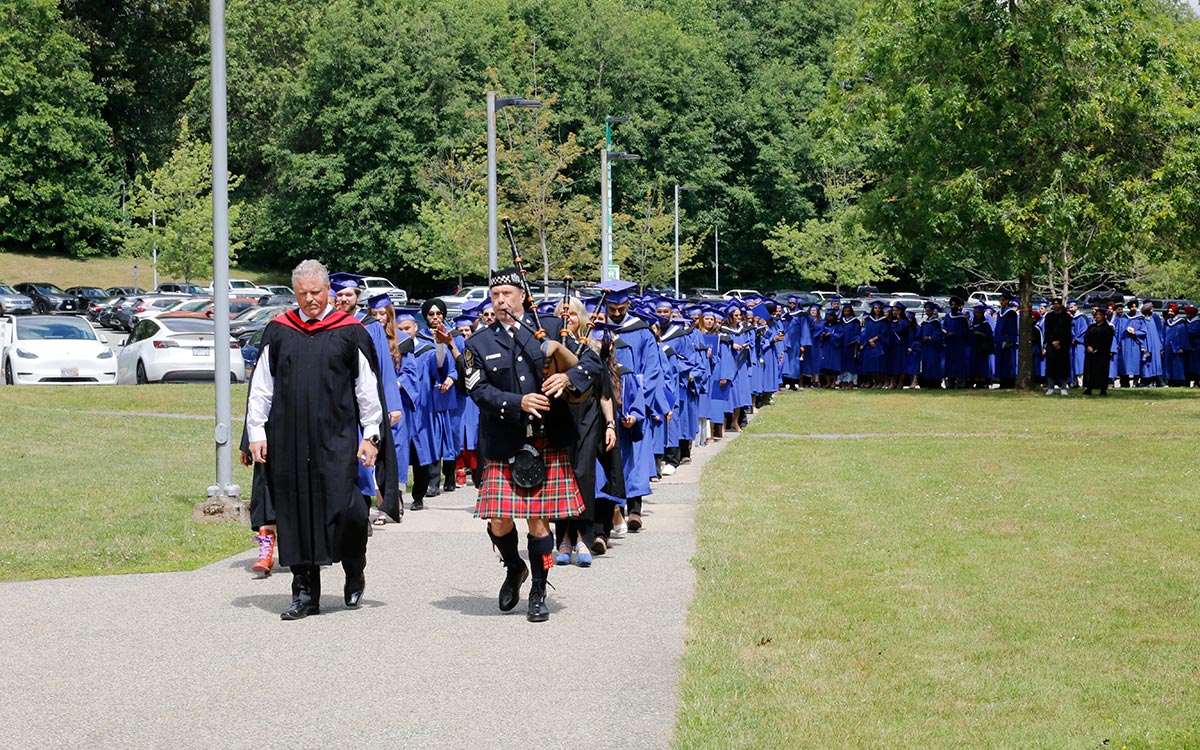
“You arrived at JIBC with a sense of purpose. Today, you leave with the knowledge, skills, and character to take on some of the most important roles in our society,” JIBC President and CEO Len Goerke told the graduating class.
“As you begin the next chapter of your lives, remember that your work is ultimately about people. It is about being there when someone is afraid, uncertain, or in need of support. You may never know the full impact of those moments, but the people whose lives you touch will remember.”
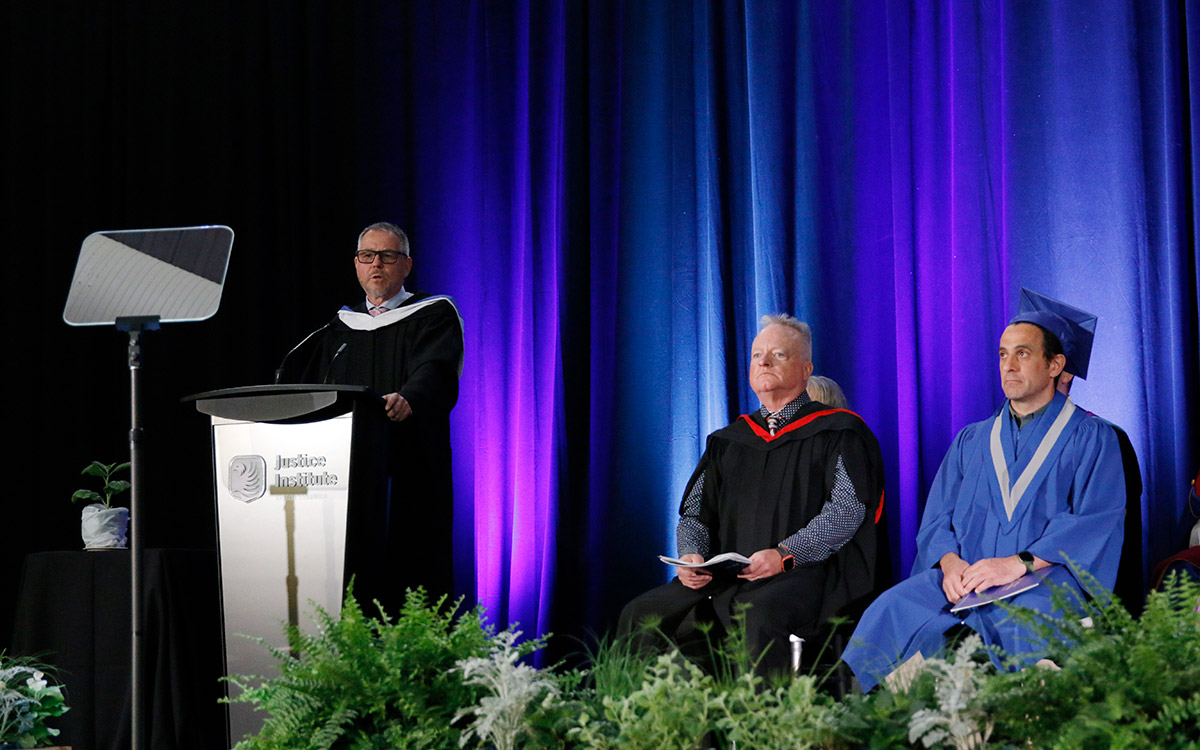
Former B.C. Ombudsperson awarded honorary degree
JIBC conferred an honorary degree on Jay Chalke, former Ombudsperson of British Columbia, in recognition of his outstanding and sustained contributions to public safety and access to justice in B.C. and across Canada.
Chalke told the graduates that while Canada’s justice system is the envy of most of the world, it is still a work in progress.
“As many have expressed, including Nelson Mandela: ‘The true measure of a society is not how it treats its highest citizens; it is how it treats its lowest,’” Chalke said. “For me, finding ways, big and small, to support the vulnerable as they sought to access justice, was a thread that wove its way through my career.”
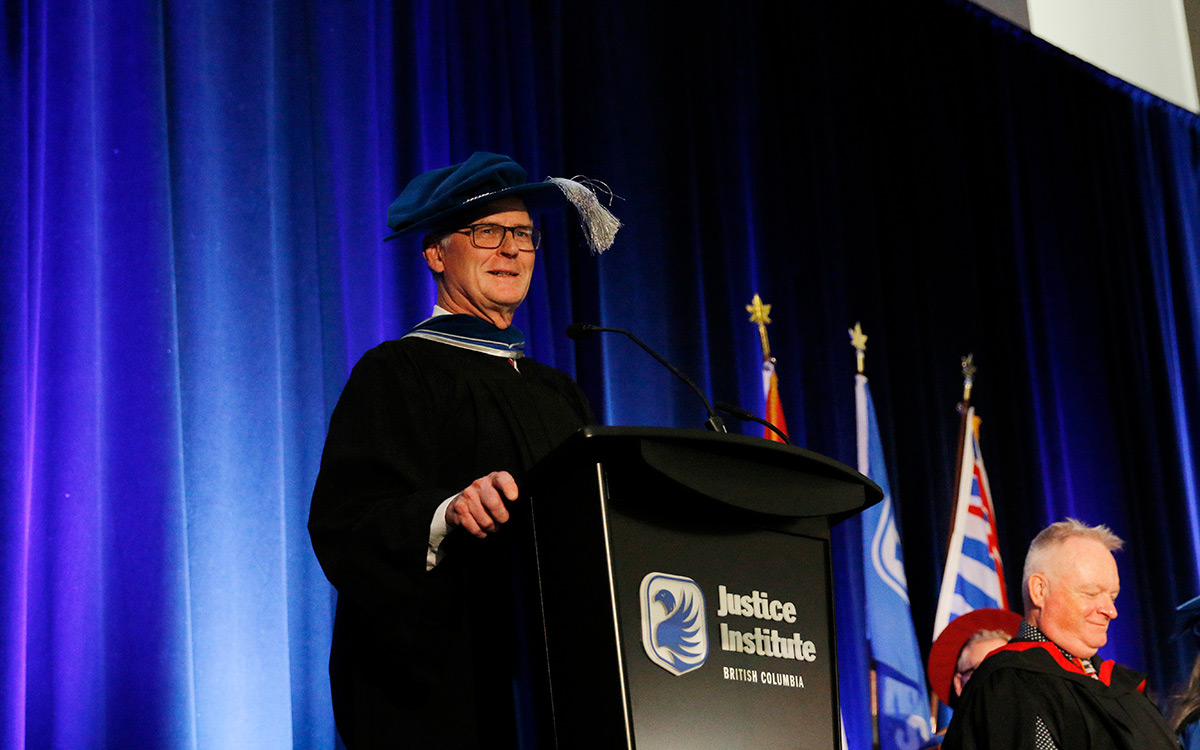
He called on the graduates, as they go forward in their careers in the justice system, to “treat every single person you encounter with the utmost dignity and respect. They may not be at their best; remember their encounter with you may be on one of the worst days of their life.”
The “rule of law can sometimes seem like a big machine with its own momentum – or inertia,” Chalke said. “Despite this, you can be the change agent – the iconoclast – who says we can do better. Almost always, that’s about dialogue. Dialogue to foster collaborative innovation is an incredibly powerful tool. Find your voice.”
Student speakers inspire their fellow graduates
Yuval Maduel, graduating with a Certificate in Collaborative Conflict Resolution, spoke on behalf of the graduating class at the morning ceremony. Originally from Israel, he said, “Having grown up in a place where the consequences of a conflict can be devastating, I was motivated to better understand its nature and to develop skills to help mitigate and resolve it.”
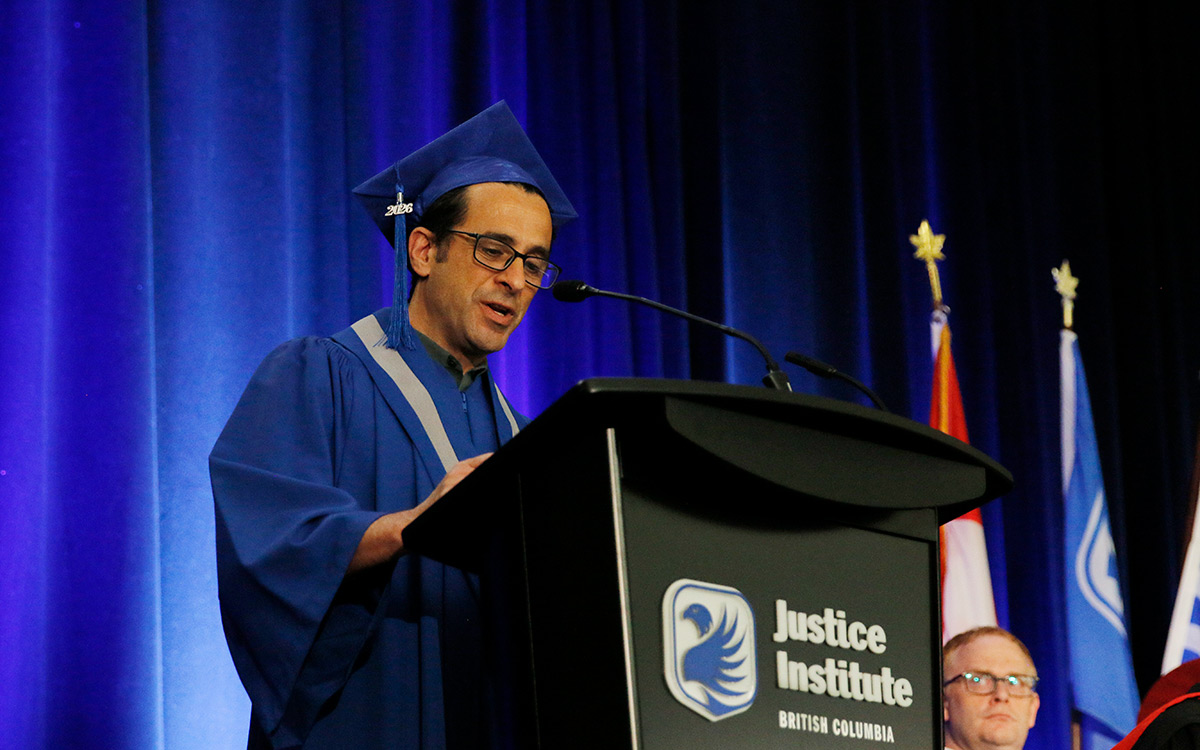
Maduel said the courses he completed “have significantly strengthened my ability to listen deeply, interpret both verbal and non-verbal communication and ask questions that open pathways to resolution.” The skills he has learned have directly supported his work with First Nations communities in advancing treaty and reconciliation agreements.
“As we leave here today, we carry more than a certificate or a degree – we carry a responsibility. A responsibility to lead with integrity and courage, to persevere when the work is difficult, and to be of service in the spaces where it is needed most,” he said.
“Whether in our workplaces, our communities, or in moments of conflict, we now have the tools to make a meaningful difference. Let us use them with purpose, humility, and respect.”
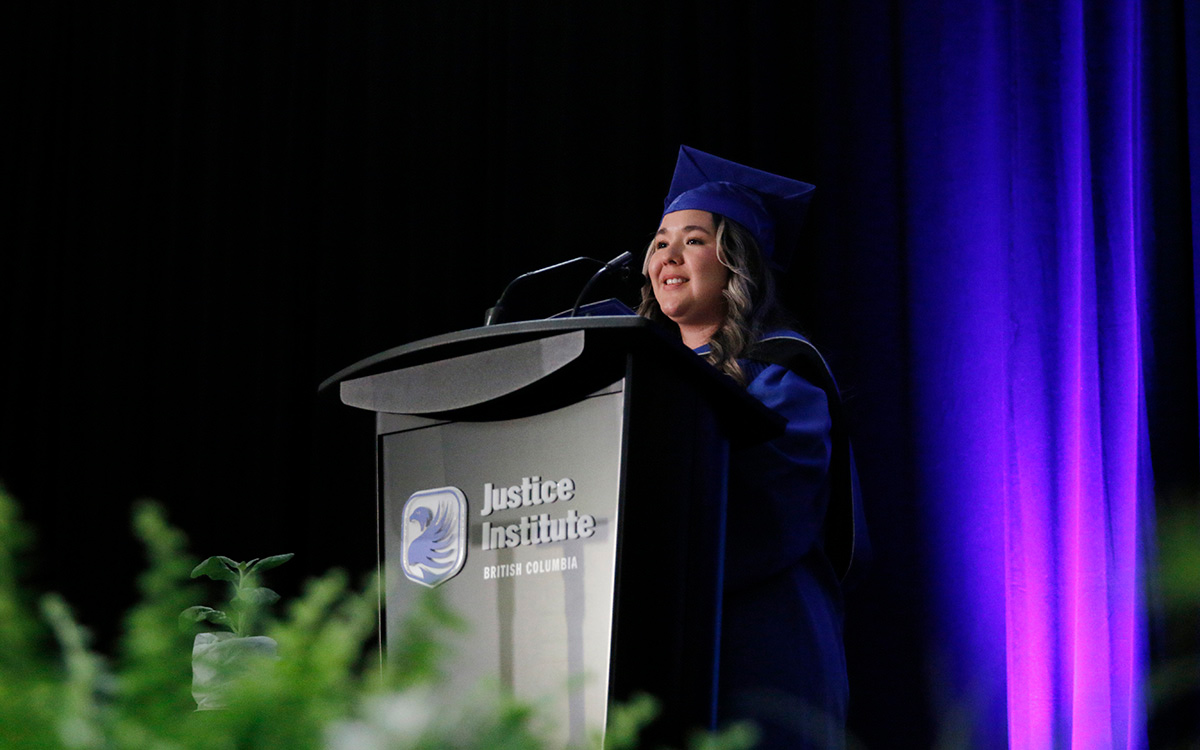
Speaking on behalf of graduates at the afternoon ceremony, Aurora Mejia Marin, noted that her JIBC experience included opportunities to volunteer at a community policing centre and study abroad in the U.K. on an exchange program.
“Needless to say, JIBC is great at pushing me out of my comfort zone, even until the very last day,” said Meija Marin. “I am grateful for it, because it has prepared me for what I hope to be a successful career in law enforcement by providing me with the right tools to develop key skills like critical thinking, conflict management, communication, and leadership, to name a few.” Graduating with a Bachelor of Law Enforcement Studies, she hopes to return to JIBC one day as a police recruit.
She told her fellow graduates, “Continue to believe in yourself and trust that the skills you have learned will guide you through difficult situations. Remember today as proof that you can achieve anything you set your mind to.”